
Should You Walk or Fly Back? Everest Base Camp Trek vs Helicopter Return Compared
24th Sep, 2026

Imagine you're at Gorak Shep, the last settlement before Everest Base Camp. The mountain you've dreamed about is finally in front of you, your boots are dusty, and your energy is low. Now comes a practical question: do you walk the whole trail back, or take a helicopter and be in Kathmandu the same day?
Table of Contents
This guide helps you decide without any sales pressure. It covers time, cost, safety, comfort, and the small details people rarely mention until they're already on the trail. It's written for anyone comparing an Everest Base Camp trek on foot with an Everest Base Camp helicopter return.
The Short Answer:
-
Walk both ways if you have around two weeks, a careful budget, and a love of slow travel.
- Fly back if your holiday is short, your knees dislike long descents, or you want a dramatic finish.
- Walk up and fly down if you'd like a bit of both. This is a popular middle path, and it's the idea behind the Everest Base Camp Trek With Helicopter Return package.
Know the Route Before You Choose
Starting the Trek
Most trekkers begin with a short mountain flight to Lukla, a small airstrip at about 2,860 metres. In the busiest seasons, some flights operate from a different airport outside Kathmandu, which can mean a very early start. It's smart to build a rest day into the beginning of your trip.
The Stages on the Way Up
The trail passes through a series of villages, each higher and colder than the last:
- Phakding: a gentle first night beside the river.
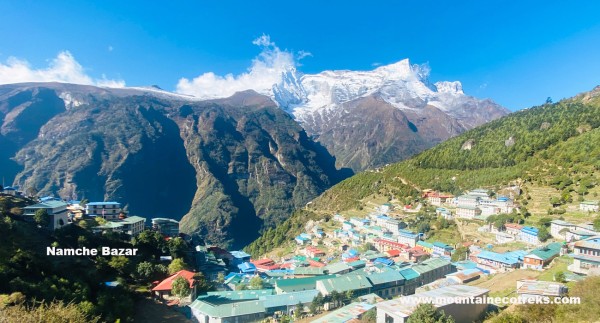
- Namche Bazaar (about 3,440 m): the busy Sherpa hub, where most people rest for a day.
- Tengboche (about 3,860 m): known for its monastery and open mountain views.
- Dingboche (about 4,410 m): a second stop for acclimatisation.
- Lobuche (about 4,940 m): rocky, windy, and close to the glacier.
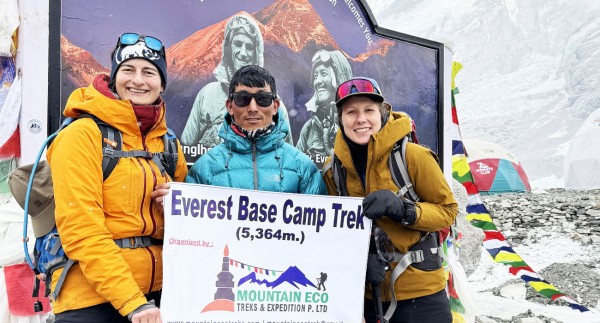
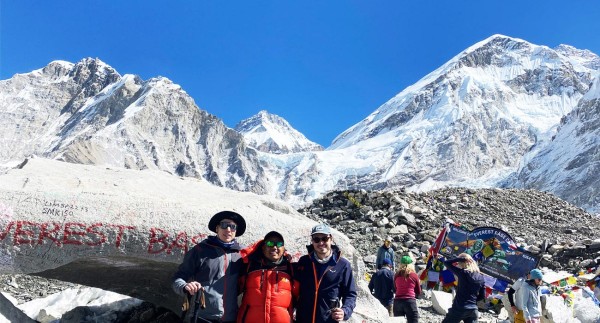
- Gorak Shep (about 5,164 m): the base for visiting Everest Base Camp at roughly 5,364 m.
Most trekkers also climb Kala Patthar for sunrise. It gives a clearer view of Everest than Base Camp does.
Option One: Walking Back Down
What It Feels Like
Going down is easier on your breathing, because the air gets thicker with each day. Many people describe the return walk as lighter and happier. You know the path, your body has adapted, and you finally have the energy to look around.
Why Some Trekkers Prefer It
-
Gentle recovery. Your body adjusts gradually to lower altitude.
- Lower overall spending. You pay for lodges and meals rather than a helicopter seat.
- A fresh view of familiar places. The valley looks different when you turn around.
- More village time. Extra evenings mean tea by the stove and quiet conversations.
- A full sense of completion. You covered every step yourself.
What to Keep in Mind
- It adds days. The way back can take several days of your schedule.
- Your knees will notice. Long descents are demanding on joints.
- Flights can be delayed. Lukla's weather is unpredictable, which can affect onward plans.
- Fatigue builds up. By the final days, many people simply want a proper bed.
Option Two: Flying Back by Helicopter
How It Works
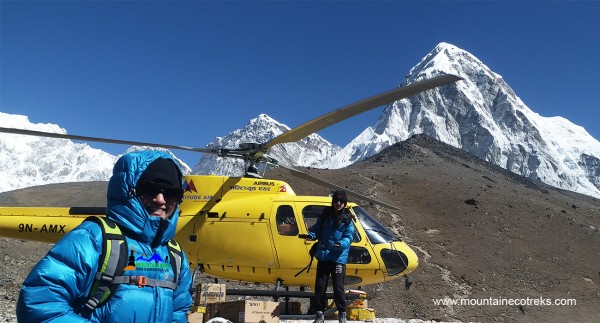
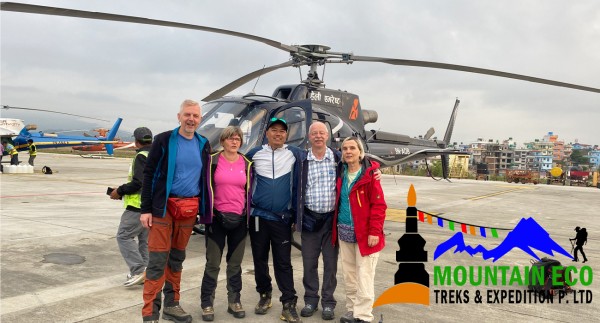
In a typical helicopter-return itinerary, you trek up to Base Camp and Kala Patthar, then fly out from a high pickup point near Gorak Shep. You may land in Lukla or fly on to Kathmandu, depending on the plan. The exact pickup location and route are decided by your operator, the pilot, and the weather.
Why Travellers Choose It
- It saves time. You can shorten the trip by several days.
- It protects your body. You skip the long downhill grind.
- It reduces Lukla stress. You rely less on the runway and its weather.
- The views are memorable. Seeing the trail you walked from above is a highlight for many people.
- The contrast is striking. You go from a cold mountain lodge to a hot shower in a matter of hours.
Things to Understand Before Booking
- Weather comes first. Flights can be delayed, so keep a spare day.
- Capacity is limited at altitude. Thin air reduces how much weight a helicopter can carry, so seats and baggage allowance may be restricted.
- You lose the slow walk down. Some trekkers feel that was the most peaceful part of the journey.
- A scheduled flight is not an emergency plan. A planned return and a medical evacuation are different, and your insurance should cover both.
Side-by-Side Comparison
| Factor | Walk Back | Helicopter Return |
|---|---|---|
| Trip length | Longer | Shorter |
| Overall cost | Generally lower | Generally higher |
| Physical strain | Higher | Lower |
| Knee and joint impact | High on the descent | Minimal |
| Weather buffer | Built into the schedule | Needs a spare day |
| View | Ground-level detail | Aerial perspective |
| Village and cultural time | More | Less |
| Best for | Purists, budget travellers | Short holidays, comfort seekers |
Understanding Costs (Without the Guesswork)
Exact prices change with season, fuel costs, group size, lodge standard, and whether you share a helicopter or charter one. Because of that, this guide doesn't quote fixed figures. Here is how to think about costs instead.
What You Pay for Either Way
- to and from Lukla (or an alternative arrangement)
- Trekking permits required for the Everest region
- A licensed guide, and a porter if you choose
- Lodging and meals on the trail
- Travel insurance
- Small extras such as charging, hot showers, and snacks
Where the Two Options Differ
Walking back mostly adds extra nights and meals. Flying back replaces those days with a helicopter fee. Sharing a flight is usually cheaper than a private charter.
How to Get a Reliable Quote
- Ask for a written, itemised quote.
- Confirm whether permits, guide, porter, and taxes are included.
- Ask what happens to the cost if the flight is delayed or cancelled.
- Check the current permit fees with official sources, since they are revised from time to time
- Value, Not Just Price
- If your time off is limited, the days a helicopter saves may be worth more than its cost. If you have plenty of time and a tight budget, walking is the practical choice. Neither is wrong.
Altitude and Safety: The Honest Part
Altitude Sickness
Altitude illness can affect anyone, however fit. Common signs include headache, nausea, dizziness, poor sleep, and unusual tiredness. The best defences are simple: ascend slowly, rest on acclimatisation days, drink plenty of water, and tell your guide early if something feels wrong.
Does a Helicopter Return Make the Trek Safer?
Not on its own. Rushing your ascent because a helicopter is waiting is a mistake. The risk sits on the way up, and it depends on your pacing. If symptoms become serious, descending quickly and following your guide's instructions is the priority.
Insurance Checklist
Before you travel, confirm that your policy covers:
- Trekking at altitudes above 5,000 metres
- Helicopter evacuation
- Medical treatment and repatriation
- Trip delays and cancellations
Guides and Regulations
Rules on guides, permits, and regional access have been changing in recent years. Ask your operator to confirm what applies on your travel dates. Even where rules allow independent travel, an experienced guide is one of the best safety choices you can make.
When Should You Go?
Spring (March to May)
Warmer days and blooming rhododendrons make this a favourite. It's also busy, so book early.
Autumn (September to November)
Often considered the best window, with clear skies after the monsoon. Expect crowds and crowded flight schedules.
Winter and Monsoon
Winter is very cold, and some lodges close. The monsoon brings clouds and rain, which raise the risk of delays for every kind of flight.
A Simple Rule
Add at least one spare day at the end of your plan. It costs little and can prevent a lot of stress.
Who Should Walk, and Who Should Fly?
Walk Back If You…
- Have two weeks or more
- Enjoy village life and slow travel
- Want to keep costs down
- Have healthy knees and good stamina
Fly Back If You…
- Have a fixed, short holiday
- Have joint problems or past injuries
- Are travelling with older relatives or first-time trekkers
- Want a memorable, low-effort finish
- Want to reduce your exposure to Lukla delays
Make the Whole Trek More Comfortable
Some travellers care as much about how they trek as how they return. Better lodges, private guiding, and smoother logistics can make hard days easier and nights more restful. If that sounds appealing, the Everest Base Camp Luxury Trek offers the same iconic route with extra comfort. It pairs well with a helicopter finish for a very relaxed experience.
How to Prepare, Whichever You Choose
Train Ahead
Start two to three months before departure. Focus on:
- Cardio: hiking, cycling, or stair climbing
- Leg strength: squats, lunges, and step-ups
- Long walks with a loaded daypack
Pack Sensibly
Bring layers, a warm insulated jacket, a waterproof shell, well-broken-in boots, a warm sleeping bag, sun protection, and a small first-aid kit. Keep the weight low.
Choose a Trustworthy Operator
Look for licensed guides, transparent pricing, and clear policies for weather delays. Ask exactly where the helicopter lands, how many people share it, and what happens if it can't fly.
Frequently Asked Questions
Can I fly back soon after reaching Base Camp?
Many itineraries are designed this way. Trekkers usually spend a night at Gorak Shep, climb Kala Patthar at dawn, and fly out if conditions allow. Your operator will confirm the details.
Is the helicopter return worth it?
For many people, yes, especially when time is short or knees are a concern. If you have lots of time and love walking, the trail may be more rewarding.
Do I still need to acclimatise if I fly down?
Yes. The helicopter only changes the way back. Your safety on the way up still depends on a proper schedule.
Can bad weather cancel the helicopter?
Yes. Keep a spare day and ask how your operator handles delays.
What if I feel unwell on the way up?
Tell your guide immediately. Emergency evacuation is separate from a scheduled return, so make sure your insurance covers it.
Final Verdict: Walk or Fly?
There's no single right answer, only the one that fits your time, body, and budget. Walking back gives you the complete Himalayan story at a gentler pace. Flying back gives you time, comfort, and a dramatic last look at the mountains.
If you want the traditional adventure, the classic Everest Base Camp Trek delivers it in full. If you'd rather walk up and fly down, the helicopter return is a smart middle path. Either way, standing at Everest Base Camp is a memory you'll keep for life.
Recent From Blog

19th Apr, 2019


23rd Dec, 2018

11th Jan, 2024

14th Jan, 2024

29th Jan, 2025

11th Feb, 2025

18th Feb, 2025

25th Feb, 2025

5th Apr, 2025
23rd Dec, 2025
9th May, 2026
12th Jul, 2026

13th Aug, 2026
13th Aug, 2026
13th Aug, 2026

16th Aug, 2026
20th Aug, 2026


11th Sep, 2026